Followers

Showing posts with label Millets benefits. Show all posts

Thursday, March 30, 2023

BAJARA USESS AND BENEFITS

BAJRA USES AND ITS BENEFITS

  • BAJARA

    Bajra grains can be used to make porridge, which is a popular breakfast option.
  • Bajra can also be used to make snacks such as khichadi and vada.
  • Bajra is often used as a feed for livestock, particularly in arid and semi-arid regions where other grains may not grow well.
  • Bajra can be used to make a fermented drink called mahewu or amahewu, which is popular in southern Africa.
  • Bajra can be ground into a fine powder and used as a thickener for soups and stews.
  • Bajra is often used as a feed for livestock, particularly in arid and semi-arid regions where other grains may not grow well.
  • Bajra can be used to make a fermented drink called mahewu or amahewu, which is popular in southern Africa.
  • Bajra can be ground into a fine powder and used as a thickener for soups and stews.
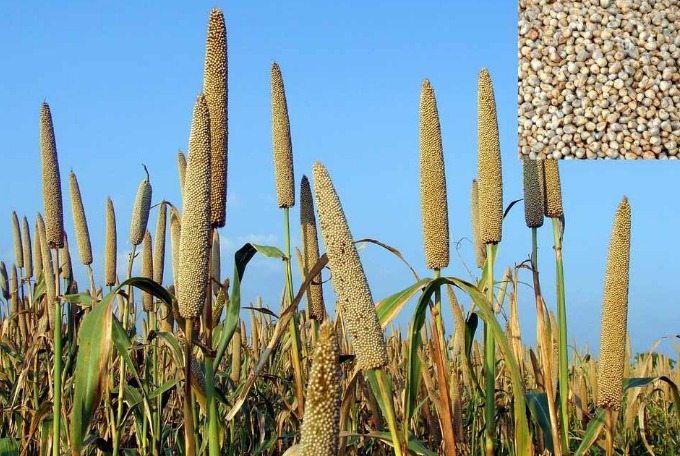
    BAJARA PLANTS

Benefits:

Bajra is rich Bajra, also known as pearl millet, is a nutritious cereal grain that is commonly consumed in many parts of the world. Here are some of the uses and benefits of bajra:

Uses:

Bajra flour is commonly used to make traditional Indian flatbreads such as roti, bhakri, and thepla. RICH in fiber, which helps promote digestion and prevent constipation.

  1. It is a good source of protein, which is important for building and repairing muscles.
  2. Bajra is rich in iron and can help prevent anemia.
  3. It is low in fat and can be a good addition to a weight loss diet.
  4. Bajra is gluten-free and can be a good alternative for people who are sensitive to gluten.

However, it is important to note that bajra is high in carbohydrates and should be consumed in moderation by people with diabetes or those following a low-carb diet.

  1. Bajra is a good source of several essential vitamins and minerals, including magnesium, phosphorus, potassium, and B vitamins.
  2. It is a low glycemic index food, meaning it releases glucose into the bloodstream slowly and can help prevent spikes in blood sugar levels.
  3. Bajra may help lower cholesterol levels and reduce the risk of heart disease.
  4. Bajra contains antioxidants, which can help protect against oxidative stress and inflammation.
  5. Bajra may have anti-cancer properties and has been studied for its potential to inhibit the growth of cancer cells.

Overall, bajra is a nutritious and versatile grain that can be a valuable addition to a healthy diet.


Sunday, March 19, 2023

RAGI RECIPE

here's another recipe that uses raggi flour:

Raggi Porridge

Ingredients:

  • 1 cup raggi flour
  • 3 cups water
  • Salt to taste
  • Sugar or honey to taste
  • Milk or non-dairy milk of your choice (optional)

Instructions:

  1. In a pot, bring the water to a boil. Add salt to taste.
  2. Slowly add the raggi flour to the boiling water, stirring constantly to prevent lumps from forming.
  3. Reduce the heat to low and let the mixture simmer for 10-15 minutes, stirring occasionally, until it thickens.
  4. Add sugar or honey to taste, and mix well.
  5. If desired, add milk or non-dairy milk of your choice to make the porridge creamier.
  6. Serve hot, garnished with chopped nuts or dried fruit.

This raggi porridge is a nutritious and filling breakfast or snack, perfect for a cold winter morning.


Monday, March 13, 2023

RAGI USES AND BENEFITS

RAGI THE SUPERFOOD


Ragi is a cereal grain that is also known as finger millet. It is a staple food in many parts of India and Africa, where it has been cultivated for thousands of years. Ragi is a hardy crop that can grow in poor soil conditions and requires little water, making it an important crop for farmers in regions with limited resources.

Ragi is a good source of several important nutrients, including calcium, iron, and fiber. It is also gluten-free, making it a great option for people who have celiac disease or are sensitive to gluten.

BENEFITS OF RAGI:

  • Ragi is considered a low glycemic index (GI) food, meaning it causes a slow and steady rise in blood sugar levels. This makes it a good option for people with diabetes or those trying to manage their blood sugar levels.
  • Ragi is also a good source of antioxidants, which can help protect against oxidative stress and inflammation in the body.
  • Ragi flour is often used to make a porridge or a flatbread called roti or bhakri. The flour can also be used to make pancakes, dosa, and even cookies.
  • In some parts of India, a fermented version of ragi called ragi mudde is a popular dish. It is made by cooking ragi flour with water to form a thick dough, which is then shaped into balls and served with a spicy vegetable stew.
  • Ragi is also used to make a popular beverage called ragi malt, which is made by mixing ragi flour with milk, water, and sweetener, and then boiling it until thickened. It is often served as a nutritious breakfast or snack.
  • Ragi is a good source of plant-based protein, with about 7 grams of protein per 100 grams of ragi flour.
  • Overall, ragi is a highly nutritious grain that offers many health benefits and can be used in a variety of dishes.


Friday, March 10, 2023

MISSION MILLET

                                     MILLETS :                          Marvel grain of future: A matter of great pride that on the behest of Government of India under the Prime Ministership of Mr. Narendra Modi Ji and support of 72 countries at 75th session of United Nations General Assembly, year 2023 is declared as International Year of millets.
World is celebrating the millets on their plate and palates and we Indians are witnessing the millets comeback again as we had been already associated with the millets long ago. As per our Sanatan Dharma literature, millets contain 50%, 30%, 20% of the Sattva, Rajasic and tamasic characteristics which shows its connect with spirituality as well. Our rituals and the diets that has been consumed on the fasting days includes millets like kuttu (Buckwheat) and Amaranthus also establishes our strong connect with millets.Our Indian food related to our culture.
Across the globe we are entering into a new paradigm shift associated with our diet patterns, climate change as well as in the terms of new trading trends of millets. We are celebrating Year 2023 as the comeback of millets again to our farm and plates with the aim to create awareness, increase production & consumption of millets. Raising awareness to create ‘Millet Mindfulness’ is an essence of this celebration.
Millet is a crop of family Graminae (Poeceae) that can survive in semi arid zones and require less water for irrigation which will also help us in water management. Three well-known recognized crops for its resiliency to extreme weather conditions are Quinoa, Millet and Sorghum.

Major millets-
 Major Millets
Sorghum (Jowar)
Pearl Millet (Bajra)
Finger Millet (Ragi)
Minor Millets
Foxtail millet (Kakum)
Kodo millets (Kodon)
Barnyard millet (Sanwa)
Little millet (Kutki/Shavan)
Proso millet (Chenna/Barri)
Pseudo Millets
Amaranth (Ramdana/ Rajgira)
Buckwheat (Kuttu)
Health Benefits of millets
Millets are also known as nutri-cereal as they are very high in their nutrition content. Compared to rice, they have 30 to 300% more nutritional elements such as Calcium, Minerals, Iron, Fibre, Beta Carotine and many other micronutrients. Millets are rich in B vitamins, calcium, iron, potassium, magnesium, zinc, they are gluten-free and has low-GI (Glycemic index) thus millets are suitable for people allergies/intolerance of wheat. Diabetic persons and people suffering from weight gain can also opt for millets.

Millets are resilient to environmental stress, pests, and illnesses, making them a sustainable food supply to fight hunger in a changing world. Millets are also a long-term alternative for halting climate change and creating climate-resilient agri-food systems because they don’t need a lot of water or other resources.

Iron, folate, calcium, zinc, magnesium, phosphorus, copper, vitamins, and antioxidants are all concentrated in nutri-cereals. Dietary fibre is abundant in millets. Along with being essential for children’s proper growth and development, they have been demonstrated to reduce the risk of heart disease and diabetes in adults. Millets are good for diabetics because they don’t contain gluten and have a low glycemic index. They can also help prevent cardiovascular disease and nutritional deficiencies.

Milltes Scenario in India

India produces >170 lakh ton ( 80% of Asia’s & 20% of global production). India is among the top 5 exporters of millets in world. World export of millet has increased from $400 million in 2020 to $470 million in 2021 (ITC trade map). India exported millets worth $64.28 million in the year 2021-22, against $59.75 million in 2020-21. Share of Millet based value added products is negligible. 


बाजरे की खिचड़ी

                           बाजरे की खिचड़ी  बाजरे की खिचड़ी एक बहुत ही स्वादिष्ट और पौष्टिक व्यंजन है, खासकर सर्दियों के मौसम में इसे खाना ब...